
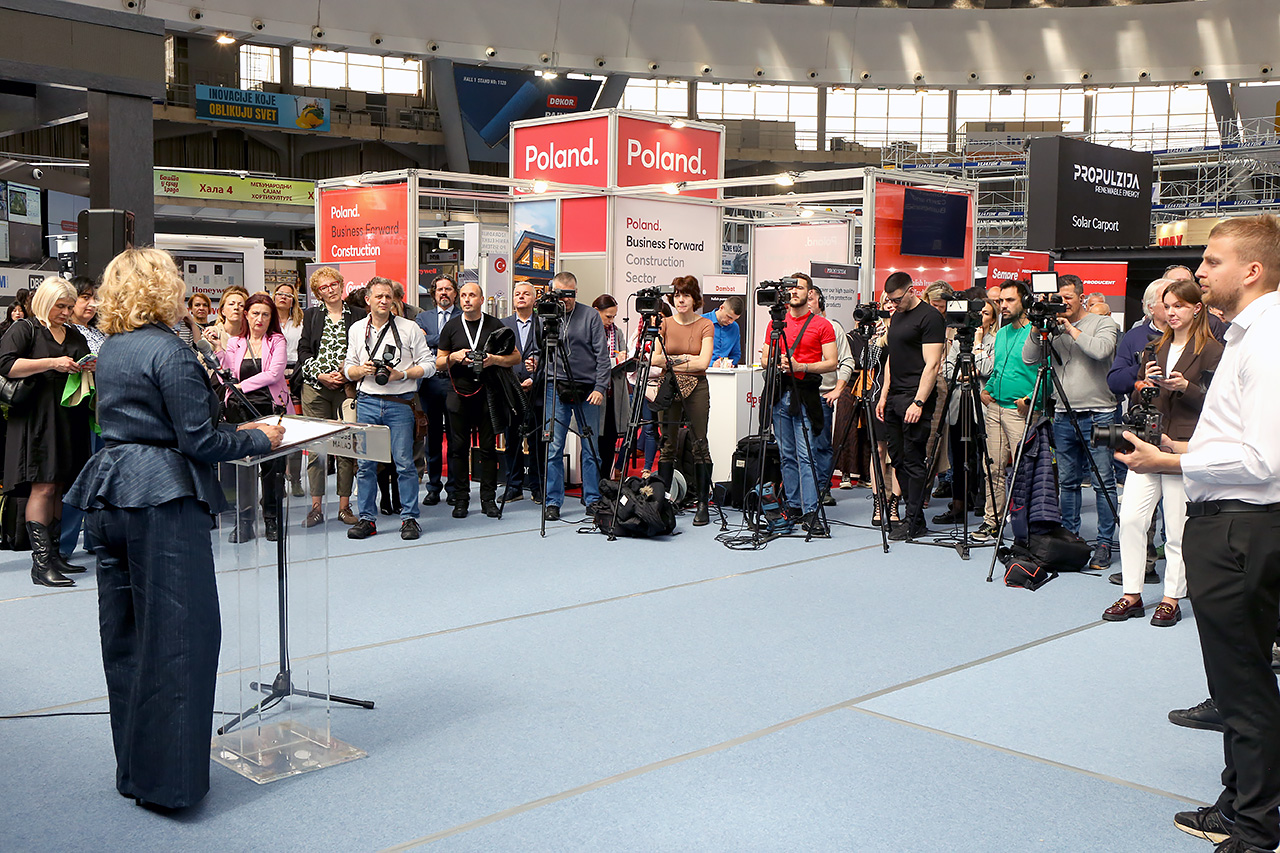
At the Belgrade Fair, two major spring events were officially opened with a: the jubilee 50th International Construction Fair SEEBBE and the 31st International Horticulture Fair Beoplant Fair.
Over the next four days, until April 24, the latest achievements and contemporary trends in the building industry and horticulture will be presented by more than 500 exhibitors from over 30 countries.
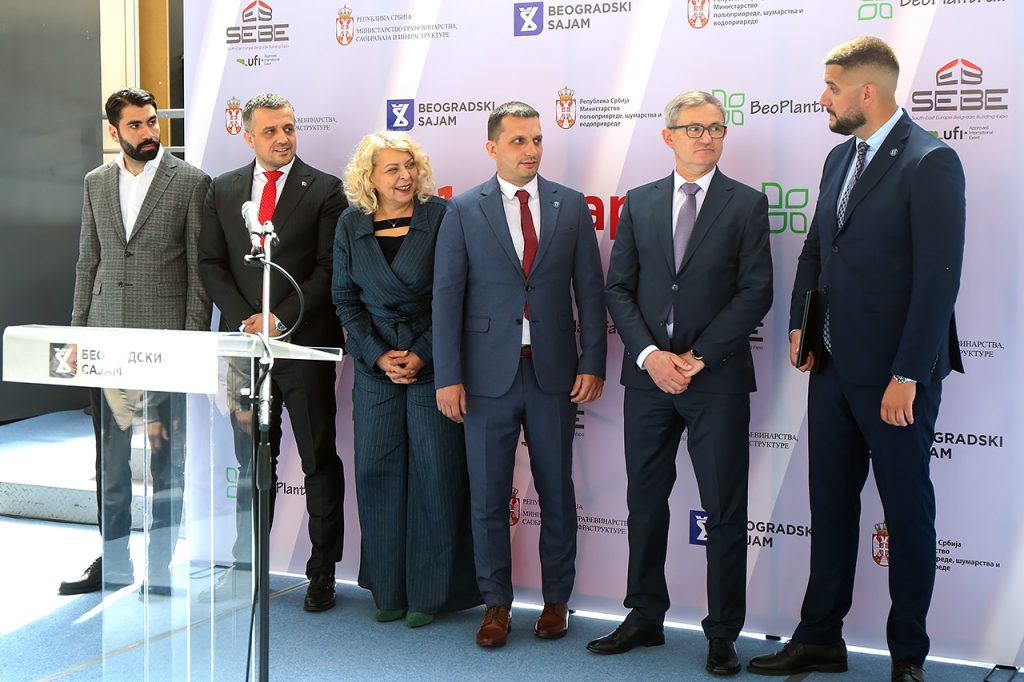
The fairs were formally opened by the Minister of Construction, Transport and Infrastructure, Aleksandra Sofronijević, and the Minister of Agriculture, Forestry and Water Management, Dragan Glamočić.
The audience was addressed first by Marko Blažić, Chairman of the Supervisory Board of the Belgrade Fair, who welcomed all exhibitors and guests and expressed his satisfaction that two important events are being held simultaneously at the Belgrade Fair, representing an important platform for meetings between experts, investors, and manufacturers.
“Alongside this year’s exhibitors, whom I would like to thank, as well as the Ministry of Construction, Transport and Infrastructure as the patron of this year jubilee edition of the Fair, where a number of new companies are presenting themselves—whom we also thank for their trust. Traditionally, National exhibitions attract great attention, and this year companies from Austria, China, Poland, Republika Srpska, Montenegro, the Czech Republic, as well as a large number of Turkish companies are presenting themselves,” Blažić said.
He added that the anniversary we are celebrating is not only a reflection of a rich tradition, but also a strong incentive for the future.
“On the other hand, at the same time, the 31st International Horticulture Fair Beoplant Fair, held under the slogan ‘Garden in the Heart of the City’ opened, with a strong message of preserving nature and environmental commitment in the most meaningful way. It is traditionally complemented by three additional exhibitions: Gifts of Nature, Organic Fest, and Motoplant Expo,” Blažić stated.
Opening the 31st International Horticulture Fair, Beoplant Fair, Minister of Agriculture, Forestry and Water Management Dragan Glamočić emphasized that the sector in Serbia holds significant but still underutilized potential.
He underlined that horticulture is not a marginal branch of agriculture, but a high value-added form of production that generates higher income per unit of land and creates new employment opportunities, particularly for small and medium-sized producers.
According to him, Serbia achieved an international trade exchange in horticulture of nearly 49 million euros last year, but with a pronounced imbalance between exports and imports, which represents room for further growth.
Glamočić also stated that flowers in Serbia are currently grown on around 600 hectares in open fields and around 270 hectares in greenhouses.
“We have a favorable climate, a tradition of nursery production, knowledge, and a market. Serbia is among the most favorable areas in Europe for rose production, but we need better organization, more investments, and a stronger market presence,” the minister said.
He further stressed that the ministry’s policy is focused on modernization and strengthening domestic production as a substitute for imports, as well as improving market regulation and enhancing cooperation among producers.
In his view, the state alone cannot drive progress; it is essential for producers to connect, invest in quality, and adopt a market-oriented approach.
“Horticulture is not only an economic activity, but also a component of quality of life, green urban infrastructure, and an important response to climate challenges,” Glamočić concluded.
Opening the jubilee edition of one of the most influential fairs in the region in the field of construction, the 50th SEEBBE, Minister Sofronijević said that the Ministry of Construction, Transport and Infrastructure as well as the Government of Serbia are strategically committed to green building.
She emphasized that the Construction Fair has for decades represented a reflection of the development and knowledge of our country and is the most important and comprehensive event of the construction and architectural industry in Southeast Europe.
According to her, the participation of more than 500 exhibitors from the country and abroad at this four-day event is a clear indicator that Serbia has become an important meeting point for ideas, investments, and modern technologies.
“Today more than ever we speak about efficiency, sustainability, safety, and innovation. It is precisely here, at this fair, that answers to the key challenges of modern construction are being sought,” she said.
She also noted that according to preliminary data based on quarterly research results, the share of construction in Serbia’s GDP in 2025 amounts to 4.7%, confirming its significant role in the structure of the economy.
“Encouraging as well is the data on growth in this sector. The fourth quarter of 2025 a 10.6% increase in the value of completed construction works was recorded. Compared to the same period a year earlier, with particularly strong growth in building construction of 13.3%, while other constructions recorded growth of 8.8%,” she said.
She mentioned that, apart from three European countries—Czech Republic, Hungary, and Slovakia—all other European countries are recording a decline.
Sofronijević emphasized that construction is one of the key pillars of the economy and undoubtedly one of the most important drivers of Serbia’s overall development, because, as she added, every dinar invested in construction returns many times over.